Monday, October 6, 2014

General Guide On Juicing For Kids

Be safe when juicing for your kids.
Follow these guidelines to minimize unwanted troubles.

Best To Start Them Young

When you decide to give fresh fruit and vegetable juices to your kids, firstly consider their age. There are no hard and fast rules but we need to be wise as kids’ tummies are much more sensitive than ours, especially when introducing new foods.
Fresh fruit and vegetable juices are one of the best things that you can give to your child. They contain the highest quality nutrients that are essential for your child as she grows up. Children who drink fresh juices regularly are less likely to fall sick compared to children who don’t drink.
It is a myth that juices will make your child obese. Fresh juices contain naturally occurring fruit sugar (fructose) that your child’s body can easily assimilate. More and more researches and studies have confirmed that there is no association between drinking juice and being obese.
Children who drink fresh juices also tend to eat fruits and vegetables. These are the children who have learned healthy eating from a young age and will be healthier in their adult life because of the solid foundation that you have given them.
Avoid letting your child drink packet or canned “juices” that you buy off the shelves or at fast foods. Even if they boast of “real fruit” or “added calcium” or similar labeling, they most likely have only less than 10% real juice. Most of these are laden with sugar, coloring, preservatives, emulsifiers, food stabilizers, etc. Chemicals that your kids can do without.

Before you embark on safe juicing for your kids, please be sure that you yourself understand the important lessons about juicing first. Here are some other pointers to bear in mind when juicing for your kids:
  • When introducing juices to young kids (under 12 years old) for the first time, always dilute the juices with one part of water (1:1). Concentrated juices are very potent and may not go down well with your child initially.
  • Observe your child when you first give her juices to see if she had any pains or diarrhea or other complaints. If she does, note what fruits or probably amount that may not be suitable for her. Adjust accordingly the next time.
  • Give the juice to your child in a cup, never in a bottle. Slow sucking from the bottle will bathe your child’s teeth in sugar for longer periods which may corrode their teeth.
  • Fruit juices contain sugar and acids that can cause tooth decays. Always give your child another cup of water after drinking juice, to rinse off the excess sugar in her mouth.
  • Do not give juices to your child close to meal times. It may deter her from taking her meal as the juice may cause her to feel full. A good time to give your child juices is in the morning, together with her breakfast. Drinking juice with food will slow down the absorption of the juices, thus avoid fluctuations in energy levels. The complex carbohydrates in juices will also provide her energy for many hours in the morning when she is most active.
  • Some children may like to drink fruit juices because of the sweetness. Even though juices are good for your child, always remember that moderation is best. Hydrate your child throughout the day also with plenty of water.

Nature’s Viagra


I read about this somewhere and was intrigued. When I did more research into it, I see why beetroot juice is sometimes referred to as Nature’s Viagra.
Erectile dysfunction is often caused by poor circulation. The potency of beetroot juice helps increase blood flow through the small capillaries almost instantly …. well, you get the idea!
Note:  There may be other underlying reasons for erectile dysfunction and this suggestion is not all-conclusive to your condition. Please check with your healthcare  provider.
Together with other “pro-sexual” vegetables like lettuce, and ginger root, this glass of red juice will keep you busy all night!

Recipe:
  • 2 green apples
  • 1 medium-sized beetroot
  • 1 bunch of Romaine lettuce
  • 1/4 lemon
  • A thumb-sized ginger root (an aphrodisiac food) — less if you don’t like strong ginger taste, but it gives the juice a nice oomph.

Warning: No more than two glasses a week. More will be overdose! Have fun!! :)

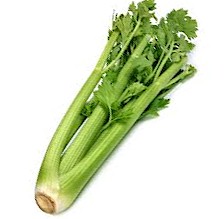
Health Benefits of Celery

The health benefits of celery are more than
just lowering 
blood pressure. They also
contain at least eight families 
of anti-cancer
compounds to combat cancer.

Description
Celery is from the same family with parsley and fennel, the Umbelliferaefamily. It can grow to the height of up to 16 inches. The white celery is grown shaded from direct sunlight, thus has less chlorophyll, compared to its greener counterparts.
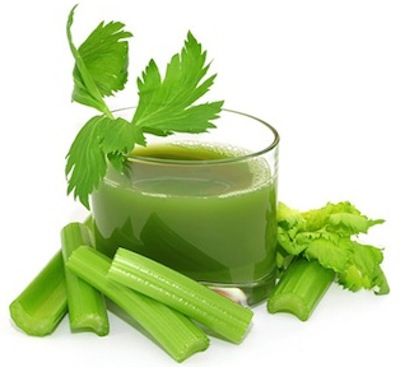
The ribs of celery are crunchy and are often used to make soup or salad. It has a salty taste, so celery juice is a good mix with the sweeter fruit juices. Depending on variety, some may taste very salty.

Nutritional Benefits
Celery leaves has high content of vitamin A, whilst the stems are an excellent source of vitamins B1, B2, B6 and C with rich supplies of potassium, folate, calcium, magnesium, iron, phosphorus, sodium and plenty essential amino acids.
Nutrients in the fiber are released during juicing, aiding bowel movements. The natural organic sodium (salt) in celery is very safe for consumption, in fact is essential for the body. Even individuals who are salt-sensitive can safely take the sodium in celery, unliketable salt (iodised sodium) which is harmful for those with high blood pressure.
While many foods lose nutrients during cooking, most of the compounds in celery hold up well during cooking.

Health Benefits
Celery has always been associated with lowering of blood pressure. When combined with other juices, it provides different formula that help other conditions.
Recent studies have shown that celery might also be effective in combating cancer. Read on.
Some of the health benefits of celery juice:
Acidity:  The important minerals in this magical juice effectively balance the body’s blood pH, neutralizing acidity.
Athletes:  Celery juice acts as the perfect post-workout tonic as it replaces lost electrolytes and rehydrates the body with its rich minerals.
Cancer:  Celery is known to contain at least eight families of anti-cancer compounds. Among them are the acetylenics that have been shown to stop the growth of tumor cells. Phenolic acids which block the action of prostaglandins that encourage the growth of tumor cells. And coumarins which help prevent free radicals from damaging cells.
Cholesterol:  This humble pale juice has been shown to effectively and significantly lower total cholesterol and LDL (bad) cholesterol.
Colon and stomach cancer:  The phytochemical coumarins prevent the formation and development of the colon and stomach cancers.
Constipation:  The natural laxative effect of celery helps to relieve constipation. It also helps relax nerves that have been overworked by man-made laxatives.
Cooling:  During dry and hot weather, drink a glass of celery juice two or three times a day, between meals. It wonderfully helps to normalize body temperature.
Diuretic:  The potassium and sodium in celery juice helps to regulate body fluid and stimulate urine production, making it an important help to rid the body of excess fluid.
Inflammation:  The polyacetylene in celery is an amazing relief for all inflammation like rheumatoid arthritis, osteoarthritis, gout, asthma and bronchitis.
Kidney function:  Celery promotes healthy and normal kidney function by aiding elimination of toxins from the body. While eliminating toxins, it also prevents formation of kidney stones.
Lower blood pressure:  Drinking celery juice every day for a week significantly helps lower blood pressure. A compound called phtalides help relax the muscle around arteries, dilating the vessels and allowing blood to flow normally. To be effective, drink the juice for one week, stop for three weeks, and start over.
Nervous system:  The organic alkaline minerals in celery juice has a calming effect on the nervous system, making it a wonderful drink for insomniacs.
Weight loss:  Drink celery juice frequently throughout the day. It helps curb your cravings for sweets and rich food.
Urinary stones, breaking of:  The diuretic effect of celery juice also aids the breaking and elimination of urinary and gall bladder stones.
You can expect many more healing benefits from celery juice as you consume its natural sodium. Read how our body lacks and have been deprived of, natural salt.

Consumption Tips
Choose green celery where possible for its chlorophyll. Ensure that the ribs are still firm, not limp. To store in the fridge, keep celery in a sealed container or wrap in a plastic bag.
Do not leave it at room temperature for too long as it tends to wilt quickly. If your celery has wilted, sprinkle it with a little water and put it in the refrigerator for a few hours. It will regain its crispness.

Caution
Celery is such a succulent plant that it produces its own “pesticide” to protect itself from fungi. This protective layer is called psoralens which although protects the celery, may not go down so well with some people.
If you begin having skin problems after eating celery, it might mean that you have some sensitivity to psoralens.
Some people with low blood pressure had complained that celery makes their blood pressure even lower. I personally didn’t encounter that problem so I believe it is also your overall make-up. But, you might want to avoid celery if you have low blood pressure. Listen to your body when you take celery.

Health Benefits of Kohlrabi

Health Benefits of Kohlrabi

This “stem” vegetable is rich in potassium, 
making it a great ingredient to be included
for an alkalizing drink. 

Description
Purple kohlrabi
Kohlrabi is a German word for  “cabbage turnip”.  It is part of the cruciferousvegetable family as with cabbage, broccoli, cauliflower, kale, collard greens and Brussels sprouts.
Although it looks like a root, it is actually a “swollen stem” that grows above the ground.  The texture of kohlrabi is similar to that of the broccoli’s stem, but is sweeter and milder in taste with a tinge of radish.
The purple kohlrabi is only colored on the outside.  Internally, it is the same as the green kohlrabi that has a white-yellow flesh.
There are different types of kohlrabi available in the market:  white and purple Danube, white and purple Vienna, and the grand duke. The kohlrabi can be eaten/juiced in its uncooked form or cooked with other vegetables.

Nutritional Benefits
Kohlrabi is found to be rich in dietary fiber, carotenoids, vitamins A, C, K and the B vitamins.  As with the other vegetables in this family, it is rich with various anti-oxidants that protect against colon and prostate cancer.
Besides the vitamins, this vegetable is also rich in calcium, potassium, iron, phosphorus, manganese and copper. Because of its rich potassium content, Kohlrabi is useful for keeping blood alkalinity that in turn helps many ailments.

Health Benefits
The many health benefits of kohlrabi are very similar to those vegetables from the cruciferous family:
Acidosis:  The high level of potassium in kohlrabi makes it a useful ingredient to be included for making an alkalizing drink to counter over-acidification.
Asthma:  The high anti-oxidant levels in kohlrabi helps in fighting asthma and lung problems.  Include this vegetable regularly as your juice ingredient, possibly a good mix with carrots, celery and green apples.
Cancer:  The anti-cancer properties in kohlrabi help in destroying the cancer cells.  However, check with your doctor if you’re on medication or therapy.
Cholesterol level:  Kohlrabi juice when mixed with green apple juice help lower the cholesterol level in one’s body. The high content of phosphorus helps in initiating this action.
Heart problems: Kohlrabi’s rich potassium content helps control the heart rate and reducing risks of heart related problems. Drink kohlrabi juice after cardio exercises for better results.
Indigestion: Kohlrabi is useful in relieving indigestion. Make a juice using kohlrabi, carrot, celery and green apples which are calming to the digestive system.
Muscle and nerve functions: The high vitamin content and enzymes of kohlrabi helps to energize the body and regulate the functioning of the muscles and nerves. Drink a glass of kohlrabi juice with carrot juice in the morning for the extra boost!
Prostate and colon cancer:  Kohlrabi, like some of the other vegetables in the brassica family, contains some health-promoting phytochemicals like sulforaphane, indole-3-carbinol and asisothiocyanates.  Studies show that these anti-oxidants  protect against prostate and colon cancers.
Skin Problems:  Kohlrabi juice also helps in easing skin problems. Regularly drink a glass of carrot and kohlrabi juice in the morning with plenty of water throughout the day for good results.
Weight Loss:  A substance in kohlrabi inhibits the conversion of sugar and other carbohydrates into fat, definitely a better way to lose weight!

Consumption Tips
When buying kohlrabi, choose the ones that are medium to small-sized and heavy.  They are young, sweet and most tender at this stage, with the purple variety being sweeter than the green ones.
To store, trim off the leaves and store unwashed, in a plastic bag in the fridge.  Eat within the week.
When preparing kohlrabi for juicing, wash it clean and cut it up to the size that fits your juicer chute.  No skin to peel.  Mixes well with any greens and root vegetables.
Happy juicing!  :)

Health Benefits of Collard Greens

The high chlorophyll content in collard greens makes 
it a very healing juice for the blood. When our blood
is flowing well, most ailments can be prevented.

Description
Collard greens are loose-leafed vegetables cultivated for their large, edible leaves that are highly nutritious.
They belong to theBrassica family, the same family as kale, cauliflower, broccoli, and cabbage, and often confused askala.
They feature dark, and thick leaves which are slightly bitter, with hard stems. They are impervious to frost and are tastier and more nutritious in the cold months. They are also sometimes called the tree cabbage or non-heading cabbage.
Collards are cool-seasonal vegetable. They are best harvested in cold climates since mild frost can bring out the sweet flavor of this vegetable.

Nutritional Benefits
Collard greens are a nutrient powerhouse, with excellent levels of vitamins and minerals.
Collards contain vitamin A, rich in B vitamins, particularly niacin (B3), pyridoxine (B6) and riboflavin (B2), which are essential for overall body health. They also contain high levels of vitamin C and K.
The leaves are also packed with folate which is an essential nutrient for DNA synthesis.
Additionally, collards are also rich sources of calcium, magnesium, and phytonutrents such as lutein and lipoic acid.

Health Benefits
The high levels of vitamins and minerals found in collard greens make this plant a really great staple vegetable. Collards are among the most nutritious leafy vegetables that help prevent and fight many diseases.
Bone Health:  Collards is great for bone health, repair and development. People who are faced with bone problem, such as osteoporosis, will find this vegetable a great help.
Blood Building:  The high content of chlorophyll in collards helps to improve the hemoglobin level in one’s body. The chlorophyll molecules are closest to human’s hemoglobin molecules, making it one of the best juices for people who are anemic. They are blood building and encourages smooth blood circulation, preventing blood stagnancy and inflammation.
Cancer:  This green vegetable contains high levels of antioxidant that fight free radicals. Free radicals are harmful elements that damage skin cells. They are the main culprits of cancer development and skin disorders initiation. Having high levels of antioxidant in the body helps lower risks of cancer.
Cholesterol:  Certain nutrients found in collards are important for lowering blood cholesterol levels. These include vitamin A and C, folate, and its fiber.
Dementia:  The high level of folate found in collards is essential for lowering homocysteine level. People who have high levels of homocysteine are found to be at risk of heart attack, stroke, and Alzheimer’s disease.
Heart Disease:  Collard greens is helpful for heart health. Its antioxidant properties and vitamin content are essential for stabilizing heart rate.
Immune System:  The vitamin C that is present in collards is great for strengthening immune system. With sufficient vitamin C, your body will be able to fight different kinds of disease.
Skin Health:  Collards are excellent source of calcium, vitamins A, C, K and phytonutrients, all representing requisite nutrients for good skin health. They are also one of the richest sources of lutein, and contains beta-carotene, both improve our skin’s elasticity, firmness and keep it healthy.
Vision Health:  Collard greens contain a high concentration amount of carotenoids (zeaxathin and lutein).  Both these ingredients  are necessary for protecting our eyes against ultraviolet lights.  Due to the high levels of these anti-oxidants, they are helpful in defending the retina against free radicals.
Weight Loss:  Collards contain a dietary fiber, an important nutrient for weight loss and maintenance. The nutrients and chlorophyll in collards are excellent properties that help improve metabolism and aid weight loss. Including collards in your daily juice helps melt the fats away!

Consumption Tips
Choose collards with leaves that have firm and smooth texture. Smaller and younger leaves usually are less bitter and have a more tender feel.
Fresh leaves can be stored up to 3 days in domestic refrigerators, and up to 10 days in high-end freezers.
Collard greens can be eaten fresh or cooked. If you prefer to eat them cooked, it is important to only cook them with small amount of water, better if you just steam them, to preserve the nutrients they contain. Overcooking will eliminate most of the vitamins and minerals in the leaves, making your dish no longer healthy.
Recommended juice using collards: 1 carrot, 2 green apples, 2 leaves of collards, ¼ lemon and 1-inch ginger makes an awesome-tasty green juice!

Caution
Like all good things, eat/juice collard greens in moderate quantity. Despite the health benefits they bring, too much may also cause harm to the body, such as swelling of thyroid glands. Do not drink of its juice more than three times a week.
Note that this vegetable also contains a certain amount of oxalic acid. Individuals who have kidney stones or history of kidney diseases should limit their intake of this vegetable.

Color Food Groups

Include natural foods from ALL color groups
in your daily diet to keep a balance and have

your health covered in all aspects!

When selecting fruits and vegetables for juicing, do not be afraid to try with various colors of nature. In fact, include as many colors as possible in order to have your health covered in all aspect.
Each food color group targets different areas of your health. When you include all the colors, you are working a myriad of disease-fighting nutrients/vitamins into your juices. It’s just simply amazing what nature provides for mankind.
Here are some explanation of each different color group:

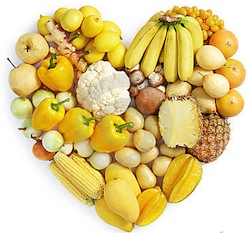
YELLOW FOODS
What They Do:
  • Pro-vitamin A activities (e.g. improve vision health)
  • Free radical scavengers (prevent diseases, slow down the process of ageing and degeneration of brain cells)
  • Protect/Prevent/Repair DNA damage (suppress tumors)
  • Immune booster (protect against common cold, destroys foreign micro-organisms like bacteria, viruses, parasites)
Some Examples of YELLOW Foods:
Banana, mango, papaya, yellow capsicum, peaches, pineapple, squash, passion fruit, white grapefruit, lemons, pomelo.

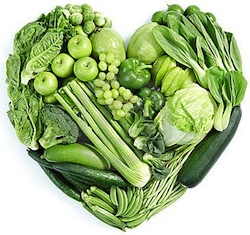
GREEN FOODS
What They Do:
  • Blood cleanser, alkalizer, multiplier
  • Regulate blood sugar level, cholesterol level
  • Lower the risk of heart diseases and stroke
  • Kill/inhibit bacteria, viruses and fungi infections
  • Maintain bone mineral density
  • Reduce allergic reactions
  • Relieves respiratory troubles like asthma and sinus
  • Reduces pain caused by inflammation
  • Eliminates body odor/bad breath
  • Improves bowel movements
  • Melt away fats
  • And many many more … !
Some Examples of GREEN Foods:
Alfalfa sprouts, asparagus, broccoli, Brussels sprouts, green cabbage, celery, cilantro, collard greens, kale, lettuce, parsley, green pepper, watercress, wheatgrass, green apples, green tea ….. you fill in the blanks!

RED/PURPLE FOODS
What They Do:
  • Prevent/improve astigmatism, cataracts and macular degeneration
  • Prevent/improve blood sugar level in diabetics
  • Improve circulation, no more feeling weak and numbness in the limbs
  • Prevent cancer
  • Prevent/remove wrinkles and signs of ageing
  • Increase “good” HDL cholesterol and reduce total cholesterol level
  • Reduce chronic inflammation
  • Reduce kidney stone formation
  • Anti-fungal, anti-bacterial
  • Hormone balancing
Some Examples of RED/PURPLE Foods:
Red apples, all berries and currants, strawberries, pears, plums, pomegranates, prunes, red capsicum, cherries, red grapefruits, red/purple grapes, red/purple cabbage, red-flesh pittaya, red-flesh watermelon, rhubarb, tomatoes, red onions.


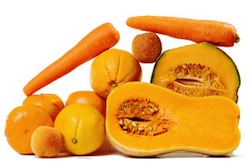
ORANGE FOODS
What They Do:
  • Prevent/repair DNA damages by free radicals
  • Protect against cardiovascular diseases
  • Protect vision health. Prevent astigmatism, cataracts, macular degeneration
  • Help reproduction system to function properly
  • Prevent/protect against many forms of cancer by preventing overgrowth/mutation of cells
  • Immune booster
  • Help regulate blood sugar level
Some Examples of ORANGE Foods:
Apricots, cantaloupe, carrots, mangoes, nectarines, oranges, papaya, peaches, persimmons, tangerines, butternut squash, pumpkin, sweet potatoes, orange capsicums.

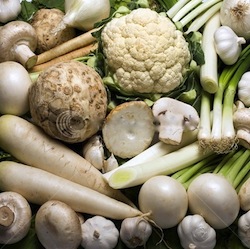
WHITE FOODS
What They Do:
  • Destroy the bad micro-organisms in the gastrointestines
  • Remove viruses, fungi and yeast infections (athlete’s foot, ear infections, Candida Albicans)
  • Replenish foods for good bacteria to multiply
  • Activate lymphocytes (white blood cells) as first line defence against bacterial invaders
  • Lower risks of stroke and heart diseases
  • Powerful immune booster and hormone-balancer
  • Preventive against cancers of the stomach, prostate, hormone and blood
Some Examples of WHITE Foods:
Garlic, celeriac, beansprouts, ginger, onions, leeks, fennel, white radish, chicory, jicama, lotus roots, white cauliflower, jicama, lemongrass, mushrooms.

BLUE/BLACK FOODS
Like a pallet of colors all mixed, all the phytonutrients from other colored foods are concentrated in the BLUE/BLACK foods, making them superfoods, a nutrition POWERHOUSE.
They have more of everything. More anti-oxidants, more anti-inflammatory properties, more phytonutrients, more minerals, more vitamins, more isoflavones, more, more …
What They Do:
  • Strengthen kidneys
  • Rebuild and strengthen bones
  • Higher level of anti-oxidants to fight cancer
  • Anti-tumor, anti-viral
  • Super immunity booster
  • Increase and regulate metabolic process
Some Examples of BLUE/BLACK Foods:
Blueberries, bilberries, black plum, black potatoes, blackberries, blackcurrants, black carrots, black grapes, black olives, black cabbage, black mushrooms, black quinoa, black beans, black sesame seeds.

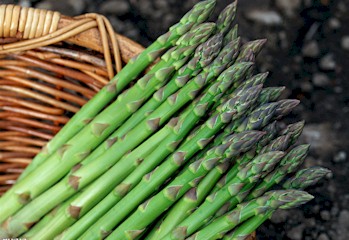
Health Benefits of Asparagus

Health Benefits of Asparagus

The alkalinity and diuretic effect of
asparagus juice helps relieve many ailments.
Description

Asparagus is a member of the lily family which includes leeks, garlic and onions. It has a spear top with bud-like, compact and pointed head.
Perhaps it may surprise you that there are a few hundred varieties of asparagus but only a small number is edible.
Although it’s available all year round, asparagus usually is most found and best in spring and is harvested when it is about 6 to 8 inches tall.
The variety we eat is usually green or greenish purple in color. There is also a white variety which is grown underground to preserve its delicate flavor. But these sunlight-deprived stalks also lack the goodness of chlorophyll.
Asparagus is expensive compared to other more common vegetables simply because it is harvested by hand.

Nutritional Benefits
Asparagus is an alkaline food which is rich in protein but low in calories and carbohydrates. It is an excellent source of potassium, folate, vitamins A, C and K, and traces of vitamin B complex.
A good source of dietary fiber, asparagus is also rich in niacin, phosphorus and very low sodium. And certainly most impressive is that it is one of those few vegetables that actually has the calcium and magnesium in the ideal ratio of 2:1.

Health Benefits
Asparagus has an abundance of an amino acid called asparagine, that helps to cleanse the body of waste material. As a result, some people’s urine may have a foul odor after eating asparagus. Don’t worry if this happens to you. Just be glad that your kidneys are getting a good cleansing.
Asparagus is one of the few vegetables that is dense in healthful nutrients that help many ailments.
Acidity, Blood:  The high alkalinity of this wonder juice is effective in reducing the acidity of the blood and helps cleanses the tissues and muscles of waste.
Arthritis and Rheumatism:   A unique phytochemical in asparagus that produces anti-inflammatory effect helps relieve arthritis and rheumatism.
Bowel movement:  Consume asparagus regularly for its mild laxative effect and dietary fiber that provides for regular bowel movement.
Cancer:   Asparagus is a prime source of anti-oxidant and glutathione that can help prevent the dreaded cancer.
Cataracts:  The anti-oxidant and glutathione in asparagus prevents the progression of cataracts and other eye problems.
Diabetes/Hypoglycemia:  The healthful minerals in asparagus juice make it an important diet for people who are controlling their blood sugar levels. However, it is not to be taken by people with advanced kidney diseases.
Diuretic:  Asparagus is a wonderfully diuretic vegetable and its efficacy is more pronounced when it is taken in juice form.
Heart disease:  Drink a small amount of asparagus juice mixed with raw honey three times a day daily to strengthen a weak or enlarged heart.
Kidney:  The diuretic and alkaline properties of asparagus help prevent or dissolve kidney stones. It helps break up oxalic acid crystals formed in the kidney.
PMS symptoms:  The diuretic effect of asparagus juice helps relieve premenstrual swelling and bloating. The magnesium in this wonder juice also help relieve irritability, fatigue, depression, etc.
Pregnant women:  The high content of folate, calcium and other minerals in asparagus are important in reducing the risk of birth defects and low birth weight. The diuretic effect of the juice is also a big help in reducing water retention in pregnant women.
 Consumption Tips
When buying asparagus, choose straight, firm stalks with tight tips. Always eat fresh but if have to store, keep them dry and tightly-wrapped in a plastic bag for up to three days in the refrigerator.
Eat asparagus for its dietary fiber.  But also make juice out of it, especially using the tough stem ends.
Suggestion to make a nice glass of asparagus juice: To a small bunch of asparagus (about 10-12 stalks), add a carrot, two green apples, and a slice of lemon with peel.
When eating asparagus, always lightly steam, rather than boil, to preserve the sodium and other minerals from boiling away. Avoid cooking asparagus in iron pots as the tannins in the asparagus can react with the iron and cause the stalks to become discolored.

Health Benefits of Lotusroot

Health Benefits of Lotusroot

Drinking a combo of lotusroot juice and orange juice
helps to eliminate mucus/phlegm accumulation so 
effectively.  It also helps stop internal bleeding.

Description
Lotusroots from lotus flowers (a.k.a. water lily) grow underwater in the mud. They have sausage-like sections in tuber form that have air canals through them. Lotusroots are consumed by many cultures throughout the Asian region, as medicine, tea, salad, soup, stir fried, deep-fried and even juicing!


The root is crunchy and crisp with a mildly sweet flavor very much like the water chestnut texture.
Most parts of this plant have healing virtues and can be eaten: the root, young flower stalk and seeds.

Nutritional Benefits
Lotusroot is rich with vitamin C and traces of the B vitamins.  It also has the important minerals like iron, phosphorus, copper, manganese, calcium, sodium, and high amount of protein.
Health Benefits
The lotus plant is unique as it is the only plant that can live in water, earth and air simultaneously.  It has great health benefits and the Asian cultures have realized this fact from ancient days.
Anemia due to heavy menstruation:  Lotusroot juice or soup is useful for blood building in women who are losing blood due to heavy menstruation. Drink of the juice or soup three days continuously after menstruation.
Bleeding, stop:  Traditional Chinese Medicine uses lotusroots juice to stop bleeding in the esophagus, intestines, stomach, colon and even nose bleeding.
Constipation or diarrhea:  The juice is very mild and calming to the stomach.  Yet it’s helpful for relieving constipation or to stop a diarrhea.
Energy booster:  The rhizomes are adapted tubers, which grows in mud under the water and stores energy in the form of carbohydrate/starch.The Eastern Oriental medicine believe that eating lotusroots and the seeds can help enhance the energy level and vigor of the body.
Heart protection:  Lotusroot contains the B-complex vitamins such as vitamin B-6, niacin, pantothenic acid, folate, riboflavin, and thiamin. It guards against the risk of heart-attack by controlling damaging homocysteine intensity in the blood.
Intestinal complaints:  Consuming lotusroot helps prevent intestinal and colon diseases; treating swelling of the enteritis or intestine.   Drink a combination of the lotusroot juice with ginger root juice.
Mucus Elimination:   The high vitamin C content in lotusroot juice helps to melt mucus accumulation in the respiratory system and eliminates it from your body. It releases the mucus or phlegm accumulation in the lungs and dissolve them, thus is helpful as remedy for asthma, bronchitis, cold, cough and tuberculosis.  For a better effect, juice lotusroot with equal amount of carrots.  It makes a highly nutritious drink and is delicious too!
Nervous control:   The root contains Pyridoxine (vitamin B6), which operates as coenzyme in the neuro-chemical synthesis in brain that persuades the mood. Sufficient pyridoxine intensity helps in controlling the nervous petulance, tension and headache.
Sinusitis:  Due to its ability to melt or dissolve mucus accumulation, regularly drinking lotusroot juice also helps to alleviate sinusitis.
Temperature control:  Drink lotusroot and orange juice to bring down fever, or a hot lotusroot soup as remedy for a cold. Make a soup of lotusroot and carrot, add chicken if you like.
Consumption Tips
Choose lotusroots that look crunchy and juicy and have no soft spots or blemishes on the exterior.
Store lotusroots wrapped in plastic bag and store in fridge.  Consume within five days for its best taste and nutrients.
To prepare lotusroot, cut off the joints of each section, then scrape off the thin layer of its skin with the a spoon.  For cooking or making soup, slice the lotusroot across at about 0.5 cm thickness.  For juicing, cut up the root length-wise, juice it uncooked (raw).

Caution
As lotusroots grow in the mud, it could possibly harbor parasites. With certain varieties, you’ll see mud in the air canals, wash those clean and cook thoroughly to prevent poisoning. For making juice, choose the variety that has no mud inside the air canals.  How would you know when you buy them?  You probably won’t know, but by experience you will soon know which ones to get.

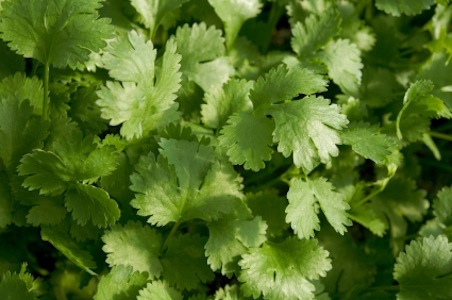
Health Benefits of Cilantro (a.k.a. Coriander Leaves)

Cilantro is one of the very few herbs that is used
as a heavy metal detox agent for detoxifying
mercury,  aluminium, lead, cadmium and others.


Description
Cilantro is also known as coriander or Chinese parsley. Its seeds and leaves are used as a seasoning condiment hence it is considered both a spice and a herb.
Cilantro bears strong resemblance to Italian flat leaf parsley with the latter having less fragrant or smell. Both belong to the same familyUmbelliferae.
The leaves of this herb should look vibrantly fresh and be deep green in color. They should be crisp, firm and free from yellow or brown spots. It has a strong smell that you either love or hate.

Nutritional Benefits
Cilantro is full of an unusual array of healing phytonutrients and anti-oxidants. Its leaves and seeds contain some amount of various essential oils that makes this herb useful for use in traditional medicines. It is anti-septic, analgesic, aphrodisiac, helps with digestion, fungicidal and a natural stimulant.

It is a very good source of vitamins A, C, K and traces of the B vitamins.  In the minerals department, it provides high amount of calcium and potassium.  Both of these would have already been helpful for relieving various ailments.  Then there are  iron, manganese and sodium.

Health Benefits
Cilantro has such a wide variety of goodness in the little leaves, making it a very useful herb for relieving many ailments.  Include a bunch into your juice regularly for its life-giving properties.
Antibiotic properties:  An antibiotic compound, dodecenal, was isolated from cilantro and tested in the laboratory. The impressive result showed that it is twice as effective as the commonly used antibiotic drug gentamicin at killing the food-borne bacteria,salmonella.
Anti-cancer:  The anti-oxidant properties from cilantro include beta carotene, vitamin C and E, ferulic, caffeic acid, kaempferol, and quercetin. This broad spectrum of anti-oxidant helps to lower the risk of oxidative stress in the cells that are carcinogenic (cancer-causing).
Anti-microbial properties:  Cilantro contains volatile oils that have antimicrobial properties, making it a very useful herb that can be used for fungal, bacterial or yeast infections.
Anti-inflammatory properties:  Cilantro is an excellent source of omega-3 and omega-6 fatty acids. Omega 3 fatty acids is the building block for several of the body’s most widely used families of anti-inflammatory messaging molecules and many other uses.
Blood sugar:  A study that was done on mice confirmed that this herb has an anti-diabetic effect and can control blood sugar. When juiced and consumed regularly, cilantro can help stimulate the secretion of insulin, thereby lowering blood sugar.
Bone Health:  Cilantro is an excellent source of calcium. Calcium is a vital nutrient that is required for formation and maintenance of strong bones.
Cholesterol lowering ability:  Cilantro when juiced and consumed on a regular basis can help reduce the amount of damaged fats (lipid peroxides) in the cell membranes. Studies have shown that cilantro can lower bad cholesterol level and increase the good cholesterol level.
Eyesight:  The high beta-carotene and anti-oxidants in cilantro make it one of the best herbs that helps alleviate eye problems thus improving eyesight. In addition, it also help reduce the threat posed by age; associated with vision disorders such as macular degeneration, and cataract.
Heavy metal detox:  Cilantro is one of the very few herbs that is used as a heavy metal detox agent, to detoxify mercury, aluminium and lead among others. Make a small bottle of neat, concentrated cilantro juice and mix with chlorella powder.  Drink an ounce of the mixture every day and feel the improvement to your brain power. Store the potion in the fridge. Read more about heavy metal poisoning here.
Immune booster:  The presence of anti-oxidants, rich phytonutrients, minerals and vitamins in cilantro all work syngergistically to boost the body’s overall immunity system against infection.
Insomnia:  Due to the various phytonutrients and medicinal values of cilantro, it helps rebalance the internal chemicals, providing a calming effect to the nerves that enable sleep to come easier.
Kidney stones:  Cilantro has a diuretic and detoxifying effect that can help lower the risk for kidney stones.

Consumption Tips
How to store: Wrap cilantro (still with the roots) loosely in a piece of newspaper to keep it free of moisture. Put in a plastic bag and store in the fridge to preserve it for a longer period of time. When stored properly, it can last for up to a week.  When you want to use it, remove it from storage and soak in a bucket of clean water for about 10 minutes for it to revert back to its crisp state.
Since cilantro is very fragile, it should be washed very delicately before juicing. Put it inside a bowl filled with clean water, and moving it around with your hands gently. This process will make sure that all dirt and sand on the leaves are dislodged, and settled at the bottom of the bowl. Remove the leaves from the bowl, and replace the water.  Continue this procedure till it is clean.
Include a bunch in any of your green juices with a slice of lemon. Cilantro has a distinct taste that may be too strong for some people.  It is an acquired taste that you may choose not to acquire.  Those who acquired it love it!