Monday, October 6, 2014

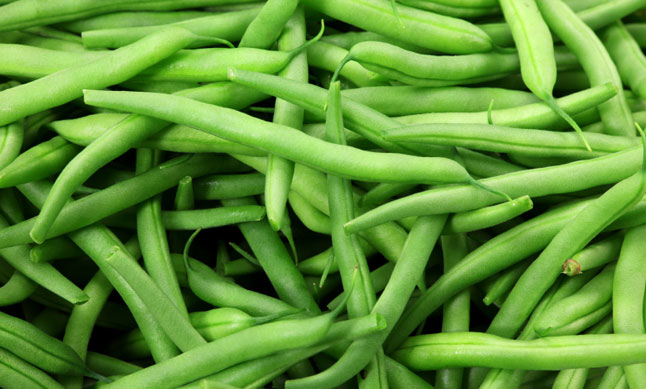
10 Amazing Benefits Of Green Beans
10 Amazing Benefits Of Green Beans

Healthy Benefits Of Green Beans

Health Benefits of Green Beans:

1. Vitamin K benefits:


3. Less calories:

Fresh green beans are very low in calories. Therefore, people who are calorie conscious need not worry and can eat them in good amounts. It also contains low amount of sodium, saturated fat and cholesterol.

4. Rich in fiber:

Green beans are a rich source of dietary fiber. Dietary fibers have many health benefits. Fibers are prescribed to people suffering from digestive issues. The fiber content in the green beans helps in prevention and treatment of constipation, haemorrhoids and diverticulosis. The high fiber content in green beans helps to maintain cholesterol and sugar levels in your body.

5. Folates:

Green beans are also a good source of folates which are useful for cell division and DNA synthesis. Folate rich foods are also helpful for women during pre-conception period and pregnancy. 

6. Prevents infections:

A number of vitamins like Niacin and Thiamine that are present in green beans are a good source of nutrients that help to prevent many infections in the body.

7. Maintains cell and body fluid:

Potassium content in green beans helps the body to maintain better cell production and body fluid movement.

8. Controls cardiovascular diseases and blood pressure:

The potassium content in green beans also helps in controlling blood pressure and other heart related diseases.

9. Vitamin A effects:

Vitamin A found in green beans helps in providing antioxidants and also in generating compounds that prevent the process of ageing.

10. Manganese effect:

Manganese content in green beans help in free radical scavenging act as it is a co-factor for antioxidants. This tends to keep you fit and healthy.

Green Beans Nutrition Chart, USDA:

Principle
Nutrient Value
Percentage of RDA
Energy31 Kcal1.5%
Carbohydrates7.13 g5.5%
Protein1.82 g3%
Total Fat0.34 g1%
Cholesterol0 mg0%
Dietary Fiber3.4 g9%
Vitamins
Folates37 µg9%
Niacin0.752 mg5%
Pantothenic acid0.094 mg2%
Pyridoxine0.074 mg5.5%
Riboflavin0.105 mg8%
Thiamin0.084 mg7%
Vitamin A690 IU23%
Vitamin C16.3 mg27%
Vitamin K14.4 µg12%
Electrolytes
Sodium6 mg0.4%
Potassium209 mg5.5%
Minerals
Calcium37 mg3.7%
Iron1.04 mg13%
Magnesium25 mg6%
Manganese0.214 mg9%
Phosphorus38 mg6%
Zinc0.24 mg2%
Phyto-nutrients
Carotene-ß379 µg
Carotene-α69 µg
Lutein-zeaxanthin640 µg

About 100 grams of green beans contains 31 kilo calories energy, 7.13 grams carbohydrates, 1.82 gram proteins, 0.34 gram fat and 3.4 grams fat. Other nutrients like calcium-37mg, iron-1.04mg, magnesium-25mg, and manganese-0.214mg are also present. Sodium and potassium are found in 6mg and 209mg respectively in this quantity. Other nutrients and their proportions are phosphorous-38mg, zinc-0.24m, Vitamin K- 14.4 micrograms and Vitamin C- 16.3mg.

It is better to use green beans in your diet for an effective dosage of nutrients. Green beans are best consumed as balsamic green beans salad. Also, they are available for consumption in pickle form.


Makes other vegetables green with envy.
One of the healthiest baby foods, and baby food ingredients you’ll ever find, green beans are a nutritious, wholesome addition to your little one’s diet. Loaded with calcium, plus vitamins K, C, and A, the positive nutrients in green beans help to build strong bones, your baby’s immune system and also help to prevent future conditions. These conditions include Alzheimer’s, atherosclerosis, diabetic heart disease, colon cancer, asthma, arthritis, acne, and ear infections. Since green beans are recognized as a food that does not cause allergic reactions, most pediatricians indicate that green beans can be introduced to your baby at the early age of four to six months.
A favorite of babies – and the moms who love them.
Best when boiled or steamed in a small amount of water, begin by cooking green beans uncovered for a few minutes, then covered for the remainder of the cooking time. Fresh green beans should be cooked no longer than 15 minutes total to avoid a mushy texture and color change. Green beans are great pureed – add water as necessary for a smooth consistency – and can also be diced into bite-sized, “finger-food” pieces. Many babies enjoy the taste of green beans, especially when mixed with carrots, potatoes, summer squash, brown rice, lentils, chicken, beef and tofu. When buying green beans for your baby recipes, remember that firmer is better and fresh green beans, stored in a sealed plastic bag, will keep in the refrigerator for about a week.
Interesting green bean facts.
Green beans were first grown in Latin America about 8,000 years ago. Christopher Columbus, and other explorers, discovered green beans planted next to maize. Green beans originally had a very thick “string” running along the outer curve of the pod, leading to their nickname of “string beans”. Scientists discovered a way to grow green beans without the string in 1894. Green beans are also sometimes called “snap beans”, as they snap when you bend them in half. There are 130 different varieties of green beans, and they can also be white, purple, golden, and red.
Try one of these tasty green bean recipes the next time you’re looking for a new recipe for your family.


Health Benefits of Green Beans:

1. Vitamin K benefits:

Vitamin K is very useful for pregnant women as it prevents the chances of neural tube defects.

2. Vitamin C benefits:

Vitamin C is a great source of antioxidants which work well towards cutting down free radical reactions. These free radical reactions result in by-products and processes that may turn out to be carcinogenic. The anti oxidants found in green beans are extremely useful for the body.

3. Less calories:

Fresh green beans are very low in calories. Therefore, people who are calorie conscious need not worry and can eat them in good amounts. It also contains low amount of sodium, saturated fat and cholesterol.

4. Rich in fiber:

Green beans are a rich source of dietary fiber. Dietary fibers have many health benefits. Fibers are prescribed to people suffering from digestive issues. The fiber content in the green beans helps in prevention and treatment of constipation, haemorrhoids and diverticulosis. The high fiber content in green beans helps to maintain cholesterol and sugar levels in your body.

5. Folates:

Green beans are also a good source of folates which are useful for cell division and DNA synthesis. Folate rich foods are also helpful for women during pre-conception period and pregnancy.

6. Prevents infections:

A number of vitamins like Niacin and Thiamine that are present in green beans are a good source of nutrients that help to prevent many infections in the body.

7. Maintains cell and body fluid:

Potassium content in green beans helps the body to maintain better cell
production and body fluid movement.

8. Controls cardiovascular diseases and blood pressure:

  • 1.Best Beauty Products
  • 2.Acne Treatment
  • 3.Best Anti Aging Products
  • 4.Anti Aging Skin Care
  • 5.Professional Makeup Tips
  • 6.Healthy Skin Diets
  • 7.Skin Care Tips
  • 8.Natural Hair Care
  • 9.Hair Care Advice
  • 10.Laser Hair Removal
  • 11.Workout Routines
  • 12.Healthy Living Tips
The potassium content in green beans also helps in controlling blood pressure and other heart related diseases.

9. Vitamin A effects:

Vitamin A found in green beans helps in providing antioxidants and also in generating compounds that prevent the process of ageing.

10. Manganese effect:

Manganese content in green beans help in free radical scavenging act as it is a co-factor for antioxidants. This tends to keep you fit and healthy.
Untitled
About 100 grams of green beans contains 31 kilo calories energy, 7.13 grams carbohydrates, 1.82 gram proteins, 0.34 gram fat and 3.4 grams fat. Other nutrients like calcium-37mg, iron-1.04mg, magnesium-25mg, and manganese-0.214mg are also present. Sodium and potassium are found in 6mg and 209mg respectively in this quantity. Other nutrients and their proportions are phosphorous-38mg, zinc-0.24m, Vitamin K- 14.4 micrograms and Vitamin C- 16.3mg.
It is better to use green beans in your diet for an effective dosage of nutrients. Green beans are best consumed as balsamic green beans salad. Also, they are available for consumption in pickle form.
- See more at: http://www.mahderetena.com/10-amazing-benefits-of-green-beans/#sthash.ok6Lkfeg.dpuf

HealthThe benefits of ham SERRANO HAM, A FULL BENEFIT FOOD

SERRANO HAM, A FULL BENEFIT FOOD

The Mediterranean diet is one of the most beneficial for our body because it is the ideal combination of nutrients, all in perspective. Any of the foods that make up the Mediterranean diet is equally beneficial for our body. This is the case of the serrano ham, a food full of benefits.
The ham is obtained from pork, and after a long process of salting and air drying, the ham is ready to be consumed. This process ensures that the ham is a completely natural food and no coloring or preservatives are added , besides it is an important source of protein for our body, so we can say it's a good ally in any sports diet .
Around the ham have always existed false myths, many people believe that it is a high fat food that harms our health rather than help. This is not true, and that only adds 160 calories per 100 grams of product, being a very good food for people who follow a diet or do not want to consume too many calories .
But what stands out the ham is to be a rich source of high quality protein. Around 31 grams per 100 are proteins. Very high values that have to be considered, particularly for those who follow a diet high in this nutrient because they are looking for muscle growth. In addition to this we must add the high biological value of the proteins of ham, and that are easily assimilated by the body .
It is also a rich source of B vitaminsB1 is specifically responsible for maintaining the proper functioning of the brain, nerve cells and heart. The B3 vitamin is directly related to the growth and it facilitates the production of energy through food. And the B6 combined with oleic acid containing ham helps prevent cardiovascular disease , and help regulate cholesterol .
It is food that also contains large amounts of iron and zinc that are essential in our body. The iron is easily absorbed by the body, and zinc that is essential to have a properly functioning immune system and proper growth and development of individuals. Therefore the ham is a good food for children.
Serrano ham is a 100% natural food. His maturation process follows natural steps and artisans and it is also a pure and aseptic food.
From now on the ham must begin to occupy a place in our diet as an ally for the proper functioning of our body. If we are athletes is important that we regularly ingest ham because we need to recover our muscles with protein and minerals.

10 ways til or sesame seeds add more to your life than just flavour!


Sesame or til has more health benefits than most other seeds. It is one of the most common ingredients used in kitchens all around the world including India. While we do relish a tasty til ka ladoo, did you know that our ancestors were right on the money when they made sure to include til and its derivatives in almost all aspects of life? Sesame has been found to have a number of benefits apart from just adding colour, flavour and texture to your food.
Here are the top ten benefits of the tiny seed:
India.com
Lowers bad cholesterol
Sesame seeds are rich in oleic acid, a potent mono-unsaturated fatty acid which lowers the ‘bad cholesterol’ or LDL cholesterol in the blood and increases the level of ‘good cholesterol’ or HDL in the body. Thereby helping you maintain a healthy lipid profile. All this in turn protects you from heart disease, stroke and atherosclerosis.
Research has found that sesame has very potent anti-cancer properties. It has been found to be effective against a number of cancers like lung cancer, colon cancer, leukaemia, prostate cancer, breast cancer and pancreatic cancer. There have been a number of papers published on its efficacy in stopping the proliferation of blood vessels supplying the tumour, in changing the way white blood cells (or your immune system cells) are attracted to chemo attractants (substances that are attracted to cancer causing agents), in reducing the rate of infiltration of the cancer etc. All these benefits are brought about by a potent antioxidant known as sesamin. Sesamin stops and slows down the regeneration of cancer cells and stops the production of chemicals that are linked to their survival. 
Helps reduce anxiety
Rich in niacin, an essential vitamin, and sesame seeds are known to reduce anxiety. With almost 28% of the total necessary daily intake of niacin present in 100 grams of the seeds, it helps in improving the GABA (gamma-Aminobutyric acid) activity inside the brain, thereby reducing anxiety and neurosis. 
Keeps your heart muscles healthy
Sesame seeds are extremely rich in essential minerals like calcium, iron, magnesium, zinc and selenium. These minerals help to regulate cardiac muscle activity making them stronger and beat at regular intervals.
Helps maintain healthy bones in children
Sesame seeds are rich in dietary proteins and very good quality of amino acids that are essential for the growth of bones in children. Just 100 g of the seed gives approximately eighteen grams of proteins. This combination is great for the uptake and use of proteins and amino acids by the child’s body, helping them grow stronger and better.
Helps keep pregnant mothers and growing foetuses healthy
Packed with folic acid, sesame seeds are great for pregnant mothers. Since folic acid is essential in the proper DNA synthesis in growing foetuses and improves the all round health of a pregnant mother, sesame seeds and their derivatives like sesame oil lends greatly to the health of an expectant mother. (Why pregnant mothers need folic acid in their diet)
Makes a great massage oil for babies
While the benefits of massaging a baby after birth is still debatable, a number of Indian cultures still practice it. According to a study, sesame oil or til oil massage showed to improve the bone strength and their growth in babies. It also showed that the child was able to sleep better after a massage with the oil. According to Ayurveda, sesame oil is said to have a relaxing effect on a child and is cooling in nature. Its innate components also add to the healthy growth of the baby. Read more about massaging your baby.
Beats osteoporosis
Due to the zinc and calcium present in sesame seeds, they are great in preventing osteoporosis. The combination of essential minerals and vitamins help in the proper assimilation of calcium by the body, and zinc helps in preventing excessive leeching of calcium into the body.
Improves the efficacy of certain diabetes drugs
A study published by the Department of Biothechnology at the Vinayaka Missions University, Tamil Nadu, found that sesame helps to reduce blood pressure and has an anti glycaemic effect with up to 36% of reduction of the glucose levels in the blood when combined with the widely used anti-diabetic drug glibenclamide.   So for a type 2 diabetic, including sesame seeds is a great idea to fight the disease naturally. 
Helps recovery after a stroke
Studies on animal models found that sesame seeds are great in restoring the blood flow to parts of the brain that have lost circulation due to a stroke. This study is based on the fact that the high amounts of magnesium and zinc present in the seed help in strengthening one’s blood circulation and neural impulses.

Top 10 Health Benefits of Brown Rice Read

Brown rice is better for you than white — most of us know that! It’s The majority of consumers typically choose white rice over brown rice because of the difference of appearance. While it’s true white rice looks so much more delicious than brown rice, it doesn’t mean it’s the healthier alternative. According to a study conducted by the American Journal of Clinical Nutrition, brown rice is the top choice in terms of both nutritional and other inherent healthy benefits.


Why Brown Rice? Brown rice is the “unrefined” version of white rice. Before white rice went through the refining process, it at one time looked exactly like brown rice. Brown rice, unlike white rice, still has the side hull and bran, which renders quicker cooking times and makes it easier to digest as it’s much “lighter” in the in the stomach. The side hulls and brans provide “natural wholeness” to the grain and are rich in proteins, thiamine, calcium, magnesium, fiber, and potassium. For those trying to lose weight or those suffering from diabetes, brown rice can prove a healthful staple given its low glycemic rating which helps reduce insulin spikes.
Unfortunately, all white rice packaging has a label that reads “enriched.” Since white rice has been stripped of iron, vitamins, zinc, magnesium and other nutrients during the refining process, manufacturers must add unnatural fortifications in the form of synthetic vitamins and iron so it can be marketed to the public as a “nutritious food.” Although white rice is fortified, it still doesn’t reach the minimum nutritional requirements for one serving of food as specified by the FDA. The healthy benefits of brown rice are listed below.
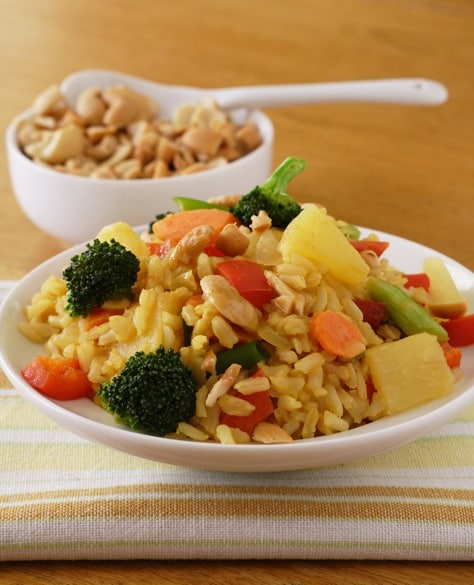
    Thai pineapple stir-fried rice


  • If you’d like to find lots of easy, tasty ways to use brown rice, see our wide array of Brown Rice Recipes.
  • If we have to choose, here are VegKitchen’s favorite brown rice recipes: 6 Filling and Flavorful Brown Rice Recipes.
  • For tips on cooking and using brown rice, see Brown Rice: Cooking Tips and Varieties.

1. Rich in Selenium Brown rice is rich in selenium which reduces the risk for developing common illnesses such as cancer, heart disease and arthritis.
2. High in Manganese One cup of brown rice provides 80% of our daily manganese requirements. Manganese helps the body synthesize fats. Manganese also benefits our nervous and reproductive systems.
3. Rich in Naturally-Occurring Oils Naturally occurring oils are beneficial for the body as these healthful fats help normalize cholesterol levels.
4. Promotes Weight Loss The fiber content of brown rice keeps bowel function at it’s peak since it makes digestion that much easier. Brown rice is the perfect addition to the daily diet for those seeking bowel regularity. In addition, brown rice also makes the tummy feel full which translates to smaller meal portions.
5. Considered Whole Grain Brown rice is considered a whole grain since it hasn’t lost its “wholeness” through the refinement process. Wholes grains are proven to reduce the buildup of arterial plaque and reduce the risk of heart disease and high cholesterol.
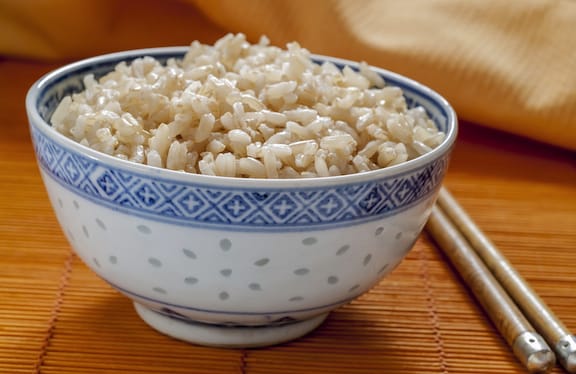
Brown rice in a bowl


6. Rich in Anti-Oxidants This is one of the best kept secrets regarding brown rice. We usually associate anti-oxidant rich foods with blueberries, strawberries and other fruits and vegetables. The antioxidant capacity of brown rice is right up there with these super stars.
7. High in Fiber Brown rice is high in fiber and on top of the list for foods that can help prevent colon cancer. This can be attributed to the high levels of fiber naturally contained in brown rice. These fibers attach to substances that cause cancer as well as to toxins in the body, thus eliminating them and keeping them from attaching to the colon wall.
8. A Slow-Release Sugar Brown rice helps stabilize blood sugar levels; therefore, it’s an excellent food choice for those suffering from diabetes. Studies show that those who consume one half cup of brown rice daily reduce their risks of developing diabetes by 60%. On the other hand, those who consume white rice regularly increase their chances of developing diabetes one hundred-fold.
9. Perfect Baby Food Brown rice cereal or brown rice itself is the perfect baby’s first food due to the dense natural nutrition and fiber it contains. This is a much better choice than refined white rice cereal products as rapidly growing babies and toddlers require nutrient rich diets to help maintain rapid growth cycles.
10. Candida Yeast Infections Brown rice is the perfect adjunct for candida yeast infection treatmentsgiven that high glycemic and otherwise sugary/starchy foods are prohibited during most candida treatment protocols. The natural digestibility of brown rice coupled with the high fiber content can help sensitive digestive systems heal from an overgrowth of candida organisms. Finally, brown rice is simply delicious and a fantastic staple for both vegetarian and vegan diets. Brown rice can be used as a white rice alternative in most vegetarian recipes and provides a full, rich and somewhat nutty flavor. Brown rice flour can be used for vegetarian pancakes, breads and other baked goods. All in all, brown rice is clearly the healthy choice.
Dr. Linda Kennedy MS SLP ND is an avid animal activist and nature lover. She owns a 10,000 square foot state of the art nutritional laboratory where she produces nutritional health supplements that are free of animal products.
_____________
Brown rice is one component of a healthy plant-based diet filled with veggies, fruits, beans, grains, nuts and seeds. If you enjoy exploring how to add more whole foods to your diet,  Plant Power: Transform Your Kitchen, Plate, and Life with More than 150 Fresh and Flavorful Vegan Recipes*  delivers a beautiful must-have guide with more than 150 delicious and versatile plant-based recipes for every day of the year. Eating vegan doesn’t have to be about sacrifice and substitutions. With Plant Power, Nava Atlas celebrates the bounty of natural foods and teaches everyone—from committed vegans to those who just want more plants in their diet—how to implement a plant-based approach to their lives—easily, practically, and joyfully, every day. Available on Sept. 2, 2014, wherever books are sold.

Sunday, October 5, 2014

Learn these 7 things even linked to migraine

Risk of suicide

When people try to commit suicide suffer from migraine. After several studies it has emerged that the unbearable pain in migraine because people try to commit suicide. This risk is higher in those in which the migraine aura or fast light and other sensory symptoms are the problem. PhD from the psychological theme of Nuyark Montifiore Medical Center, according to Don Boose, "Migraine and suicide are connected, because it is not yet clear, but the depression and migraine create a similar environment."

Migraine drug is worse than

Well migraine drug helps reduce pain, but also can have the opposite effect in many cases. The frequent use of migraine drugs have the opposite effect. Situation much worse due to the use of drugs' medication Ovrug Haddock says. This particular type of migraine is caused by the side effects of the drugs being used.

Lights and migraine

Ohio and Missouri were migraine sufferers in the study, with the introduction of the day increases the risk of migraine and migraine with adapting the day is less side effects. The study revealed that the electromagnetic waves emitted by lightning and thereby enhances the impact of migraine pain is unbearable.

Other health problems associated with migraine

People suffering from migraine stroke compared to the general population and high risk of other cardiovascular problems. Women who suffer from migraine for almost 35 years, he used to smoke and use birth control pills is the risk of stroke in the brain. However, researchers were not Aswst over the fact that why brain stroke and migraine are associated with each other.

Stress and Migraine

Buz's team conducted a study which revealed that, head movements (whether happy or sad) that rises to 20 percent risk of developing migraine. It is caused by a sudden change in hormones that occur. So to ease the pain of migraine, try to avoid stress, yoga also relax with a bumper.

Sex and migraine

The pain of migraine may increase sexual relationship, so migraine patients should avoid sex. While it is true that sex and physical exertion increases blood circulation. But according to some research, sex is less affected by migraine.

Weather and migraine

Due to the weather and the surrounding environment is also the risk of migraine. According to another study, more than half suffer from migraine patient temperature, humidity and barometric pressure are sensitive to factors such as seasonal.


Ayurveda remedy to increase brain power through

Ayurveda and brain
If our body is a ministry, his prime the brain. Without the consent of any portion of the body can not function properly. Sometimes excessive mental exertion and fatigue, digestive disturbances Institute, prolonged physical and mental infirmity or disease affecting the brain and our memory decreases. Through the slide show us through Ayurveda Learn how to increase brain power.

Almond
Found in almonds, iron, copper, phosphorus and vitamin B. It has all the medicinal ingredients act together. So the almond brain, heart and liver helps to keep working properly. To increase brain power to Bhigon five almonds in water overnight. Make a fine paste by grinding the morning peel off. Now a glass of milk and two teaspoons of honey in it, add the paste and drink it will benefit you a lot.

Brahmi
Herb is Known to brahmi Increase brain power.  Intake of The antioxidants present in regular brahmi Element Increase brain power seems to.  A Teaspoon JUICE Everyday It is beneficial to drink.  If you do you can not Eat Like Chewing the JUICE is it the Same Benefit from eating the leaves 7.

Linseed oil
OIL Linseed Increases your concentration, the faster the brain power and the power to think and understand Increases.  Regular Intake of brain-Related Disorders Linseed OIL would not you.

Fennel
One of the spices that are Fennel is USED day in the home.  Its regular use is very beneficial for Health.  Equal amounts in Make Fennel Powder and sugar mixed.  Take Two teaspoons of Powder since the food is far from being the weakness of Both Times the brain.

Walnut
Omega-3 Fatty Acids Found in Walnuts are Plentiful.  The Manganese, copper, potassium, calcium, iron, MAGNESIUM, such as zinc and selenium are present MINERALS.  Walnuts are an Excellent Source of vitamin E, which is also quite beneficial for our brain .

Cinnamon
Not Just Warm cinnamon spice, but is also A Drug.  The weak brain is good medicine.  Regularly take BEDTIME At A Pinch of cinnamon mixed with honey relieves Powder Increase Mental stress and brain power.

Nutmeg
Due to its very small amounts of nutmeg in Warm Effect to abuse BE USED brain creates very sharp.  Eat It does not, ie you never Alzheimer amnesia.

Black pepper
Looking little Medicinal Properties in Rich Black pepper to flavor food is.  To overcome the weakness of the brain is advantageous in increasing Black pepper and Memory. 25 G Butter, pepper whole routine 5-6 Castle is faster than the brain. 

The Benefits of Vitamin B6

Readily available in food as well as dietary supplements, vitamin B6 is important for a number of bodily functions. Discover the many vitamin B6 benefits.


A. The family of B vitamins, which are also known as B complex vitamins, plays an important role in converting food into energy and helping the body metabolize fats and proteins. The B vitamins are also important for healthy hair, skin, liver, and eyes. Vitamin B6, or pyridoxine, is one in this group of eight vitamins.
Q. What does vitamin B6 do?
A. “Vitamin B6 helps a lot of the systems in your body function,” says Dee Sandquist, MS, RD, CD, a spokesperson for the American Dietetic Association. “It is important for cardiovascular, digestive, immune, muscular, and nervous system function. It is one of the vitamins that are behind the scenes.” The B6 vitamin is needed for proper brain development and function and to make the hormones serotonin and norepinephrine, which affect mood. Vitamin B6 also helps the body make melatonin, which is important in helping regulate your internal clock.
Q. How much vitamin B6 do I need?
means that they dissolve in the body’s fluids, and any unneeded amounts are excreted in the urine — the body is not able to store any leftover B vitamin for future needs. You need sources of vitamin B6 as well as the other B vitamins every day. The exact amount of B6 vitamin you need depends on your age, gender, and any special circumstances, such as whether you’re pregnant or breastfeeding. Here is an overview of how much B6 vitamin people need at different stages of life:
Children
  • Newborn to 6 months: 0.1 milligram (mg) per day Infants 7 months to 1 year: 0.3 mg
  • Children 1 to 3 years: 0.5 mg
  • Children 4 to 8 years: 0.6 mg
  • Children 9 to 13 years: 1 mg
  • Boys 14 to 18 years: 1.3 mg
  • Girls 14 to 18 years: 1.2 mg
Adults
  • Men and women 19 to 50 years: 1.3 mg
  • Men 51 years and older: 1.7 mg
  • Women 51 years and older: 1.5 mg
  • Pregnant women: 1.9 mg
  • Breastfeeding women: 2.0 mg
Most people who eat a well-balanced, varied diet will get the required amount of vitamin B6 without having to take dietary supplements. “The recommended amount for an average adult under age 50 is 1.3 milligrams — you can easily get that from food,” says Sandquist.
For older adults, however, getting enough vitamin B6 may be a problem. After age 50, the recommended amount of vitamin B6 is 1.7 mg for men and 1.5 mg for women. “This can be a challenge for older Americans who may be living alone and cooking less,” says Sandquist. Older people should ask about having their vitamin B6 levels tested by their doctor, she suggests.
Some people may actually be getting too much vitamin B6, says Sandquist. This can happen if, for example, you consume too many energy drinks, which have B vitamins. “These vitamins are soluble, which means they’re harder on the kidneys and it’s harder for the body to get rid of the excess,” Sandquist says.
Q. What are some good sources of vitamin B6?
A. Excellent sources of vitamin B6 include beef, poultry, fish, and eggs. Other foods that are high in B6 vitamin are whole grains, fortified cereals, nuts, beans, bananas, and potatoes.
Vitamin B6 is usually included in multivitamins and sold as an individual supplement; it may be listed as pyridoxal, pyridoxamine, pyridoxine hydrochloride, or pyridoxal-5-phosphate.
Always talk to your doctor before taking any vitamin B6 dietary supplements. High amounts of vitamin B6 — guidelines say to limit it to 100 mg a day — may increase the risk of health problems such as nausea, abdominal pain, and even neurological disorders. Whenever possible, getting your vitamin B6 through food is the better alternative. “The truth is that food contains so many different nutrients that work together to create a synergy,” says Sandquist. “Plus, with food you are more satisfied.”
Q. What have recent research studies found about the effects of vitamin B6?
A. Preliminary research has shown that vitamin B6 benefits may include positive effects on neurological conditions such as seizures, chronic pain, depression, and Parkinson’s disease. Researchers think that this may have something to do with the fact that vitamin B6 plays an important role in the production of serotonin and dopamine, which are necessary for nerve communication.
There is also some evidence that people who do not get enough vitamin B6 may have an increased risk of heart disease and rheumatoid arthritis. In a recent large-scale study in Japan, researchers found that high consumption of dietary vitamin B6 andvitamin B12 were associated with reduced risk of death from stroke, coronary heart disease, and heart failure.
However, other studies have questioned some vitamin B6 benefits. In a recent Duke University Medical Center review of studies on nutritional supplements, researchers found that vitamin B6 may play a role in reducing the risk of macular degeneration (a cause of blindness) and stroke. On the other hand, they found little evidence that vitamin B6 delays cardiovascular disease or cognitive changes related to aging.

Top Five Health Benefits of Iron

Iron is essential for the proper growth and development of the human body. It helps metabolize proteins and plays a role in the production of hemoglobin and red blood cells. Iron deficiency can lead to conditions like iron deficiency anemia, chronic anemia, cough, and pre-dialysis anemia.
 
The health benefits of iron include the eradication of different causes of fatigue. Iron also plays a key role in strengthening the immune system by making it strong enough to fight off infections. Iron builds concentration, treats insomnia, and regulates body temperature.
 

Legumes, lentils, soy beans, whole grains, green leafy vegetables, cereals, bread, spinach, turnip, fish, meat, sprouts, broccoli, and dry fruits are all foods that have a high iron content. 
 
The top five health benefits of iron are:
 

1.Hemoglobin formation: 


The main health benefit of a diet high in iron is the formation of hemoglobin. Hemoglobin is the principal carrier of oxygen throughout the body and gives the dark red color to blood. 
 

2.Oxygen carrier: 


One of the most important health benefits of iron is that it acts as a carrier of oxygen and helps transfer oxygen from one body cell to another. This is a critical function of iron as oxygen is required by each and every body part to perform routine body functions.
 

3. Muscle function:
Iron is a vital element for muscle health and is found in myoglobin, a muscle protein. Myoglobin carries oxygen from hemoglobin and diffuses it throughout muscle cells. This is required for contraction of muscles. 


4.Brain function:
Our brain uses approximately 20% of the oxygen in our bloodstream. Iron helps supply oxygen to blood making it very important for brain health.


5.Iron deficiency anemia:

When the body’s iron levels become severely depleted, you may get anemia. Iron is also important in the treatment of iron deficiency anemia and helps cure general symptoms of anemia like fatigue, body weakness, headaches, and enhanced sensitivity to cold temperatures. A host of other chronic ailments including renal failure anemia and predialysis anemia are also helped by adequate iron intake.